Shaping the Future of Social Innovation Across Europe
The Good Deed Foundation is participating in a pan-European project aimed at sharing best practices in supporting social innovation and creating a more enabling environment for social innovation across participating countries. In addition to Estonia, the project brings together partners from Germany, the Netherlands, and Luxembourg.
“Having launched and grown innovative social initiatives for over 20 years, participating in this project offers Good Deed a valuable opportunity to gain new international knowledge and share our experience more broadly,” said Pirkko Valge, CEO of the Good Deed Foundation. “There are eight participants from Estonia in total – ranging from universities and ministries to regional development centres – each contributing their knowledge and strengths to the consortium.”
In all participating countries, support for social innovation is currently organised through competence centres or networks, and the aim of the three-year project is to take these to the next level. During the project, new incubators will be piloted, impact measurement capabilities will be strengthened, best practices in financing will be shared, and new training programmes will be developed to better leverage private sector expertise in support of innovative social initiatives.
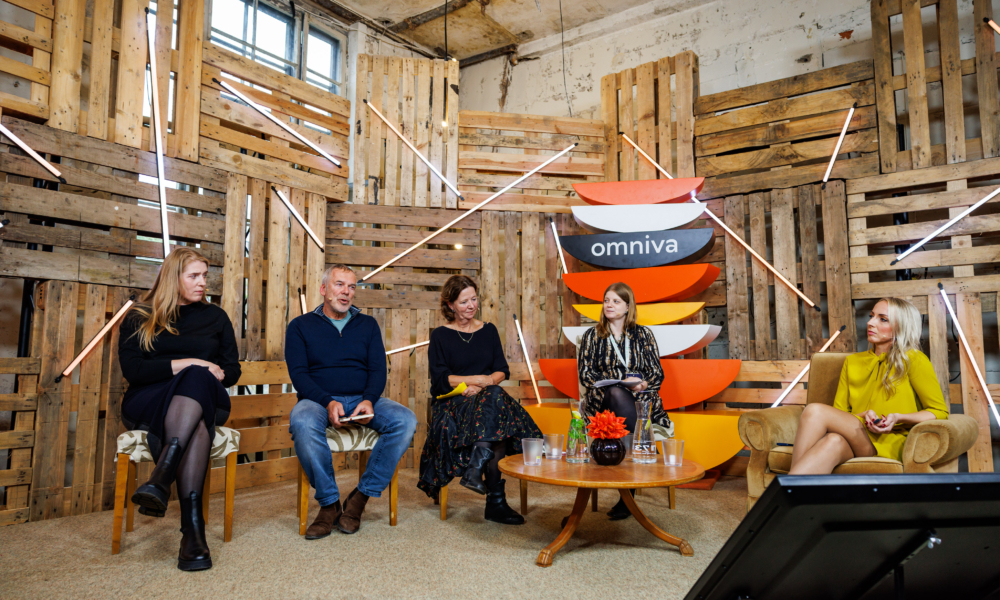
Representatives from Germany, the Netherlands, and Luxembourg visited Estonia last week to learn about the country’s experience in supporting social innovation. At a seminar held at the Good Deed Foundation’s office, international partners received an overview of Heateo’s work and learned more about the Substitute Teacher Programme and the Walk Together initiative, both of which have developed innovative solutions in the fields of education and public health. In addition, project participants took the stage at Impact Day, where they presented leading examples of social innovation from their respective countries.
In addition to the Good Deed Foundation, Estonia is represented in the project by the National Foundation of Civil Society, Tallinn University, the University of Tartu, Võrumaa Development Centre, the Estonian Social Enterprise Network, the Ministry of the Interior, the Ministry of Economic Affairs and Communications, and the Social Innovation Lab.
In total, the European Social Innovation Alliance (ESIA) currently brings together 26 member organisations from Estonia, Germany, Luxembourg, and the Netherlands. These include a wide range of actors in the field of social innovation: ministries, European Social Fund (ESF) bodies, non-governmental organisations, funders, network organisations, academic institutions, welfare organisations, companies, and incubators.
The partners collaborate to support each other in establishing national competence centres for social innovation. The aim is to improve the policy and economic framework conditions for social innovation both in the participating countries and across the European Union.
ESIA is co-funded by the European Union under the ESF+ Social Innovation+ initiative. It is one of five consortia in Europe working to build a pan-European social innovation infrastructure at local, regional, national, and transnational levels. The EU project “National Competence Centres for Social Innovation” began in May 2021 with an initial two-year funding period and has now entered its second phase, running until June 2027. While Estonia and Germany participated in the first funding round, Luxembourg and the Netherlands joined the ESIA consortium in the second phase.
Share